

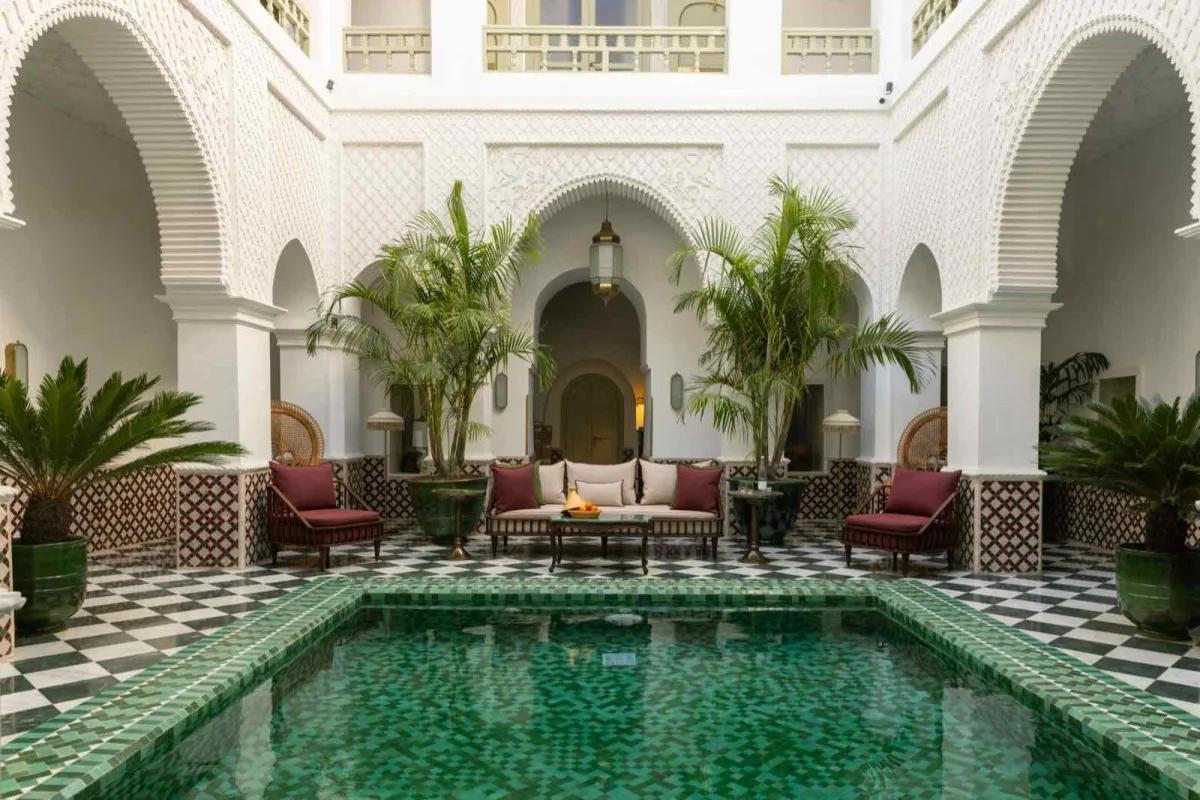
 Photo credits © Palais Beit Al Noor
The first time I stepped through the doors of this palace, it was still a construction site. Scaffolding, plaster dust, the sound of tools everywhere — and yet, beneath the disorder, the promise of something rare was already there. I had the privilege of returning several times throughout the restoration process and watching this 18th-century residence slowly come back to life.
On November 1st, 2025, it finally opened its doors under the name Beit Al Noor. Today, I can share with you what very few people have seen: not only the final result, but the journey itself.
A Palace That Needed Saving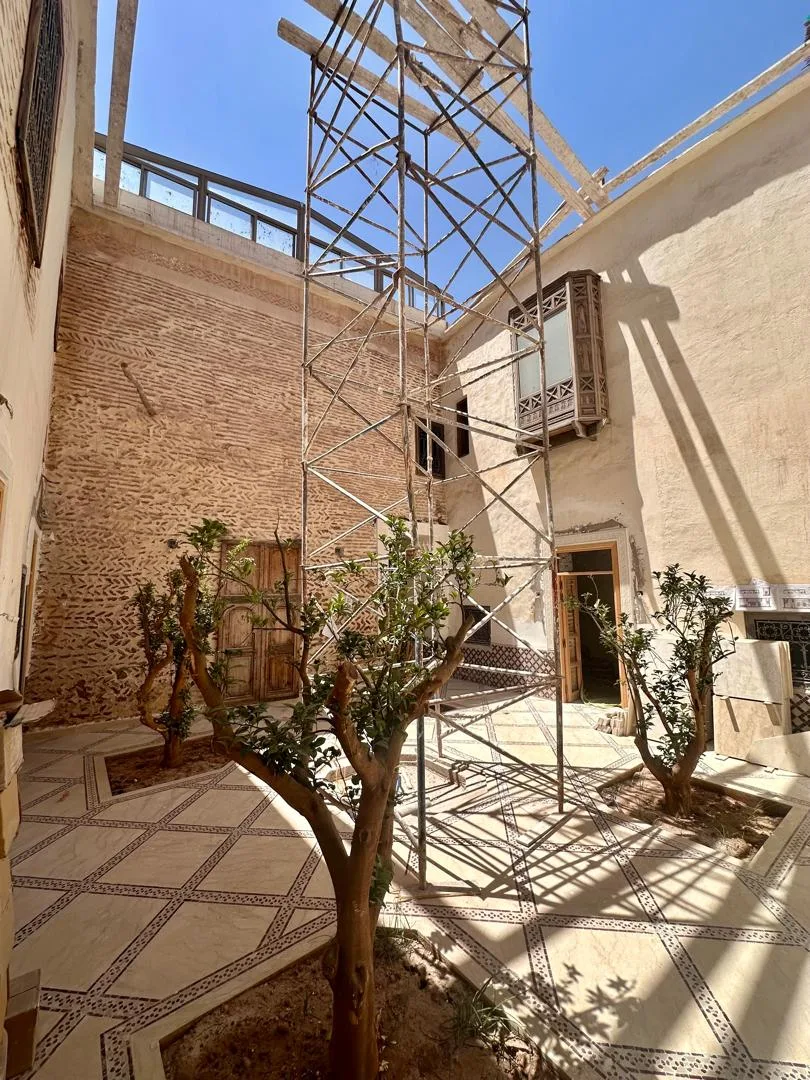
Marrakech is no stranger to beautiful addresses. What makes Beit Al Noor different is that it is not a newly built property disguised as something old — it is a genuine historic palace, nestled within the UNESCO-listed medina, restored with extraordinary care and respect for traditional craftsmanship.
Its owners, Joëlle and Nicolas Delsuc, embraced an ambitious vision: preserving the soul of the original building while weaving into it their own story — that of a Franco-Lebanese family deeply attached to Marrakech. To restore rather than rebuild is to accept slowness, constraints, and the imperfections of ancient materials. It is precisely this demanding choice that gives the palace its depth today.
Intimacy as a Philosophy
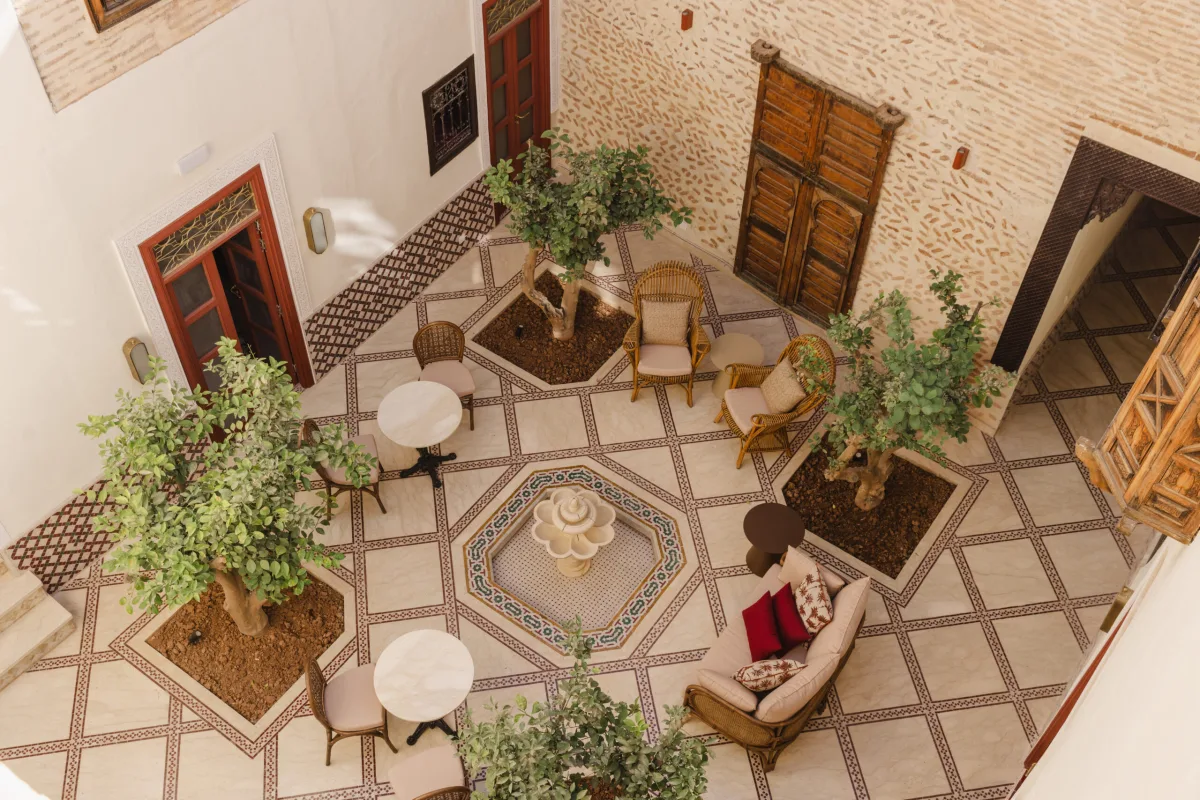
In a palace of this scale, the temptation would have been to maximize the number of rooms. Beit Al Noor chose the opposite: only twelve rooms, including four suites. A decision that says everything about the spirit of the place — prioritizing space, calm, and service over volume.
The four suites bear names that sound like a love letter to Lebanon: Khalil Gibran, Fairuz, Saïd Akl, and Majida El Roumi. Four iconic voices of Lebanese culture, reflecting the family’s roots and the heritage they wished to honor.
The palace unfolds through three distinct atmospheres — the Medersa, the Berbère, and the Douheria — conceived not as static décors, but as living spaces that evolve with the rhythm of the day.
The Detail Few Guests Will Notice
If there is one memory that stayed with me throughout my visits during the restoration, it is the plasterwork.
For months, a master craftsman — a Maâlem — sculpted by hand the intricate mouldings that now adorn the walls and arches, using the traditional gebs technique. I watched him work: an almost timeless patience, a gesture inherited through generations.
This kind of craftsmanship is not something one immediately sees. It is something one feels. It is the difference between decoration and authenticity. At Beit Al Noor, everything carries that same spirit: the painted wooden ceilings, the zelliges assembled piece by piece, the green-and-white checkerboard marble floors.
And then there is a detail I find particularly moving: hidden within the Moroccan stonework, here and there, appears a fleur-de-lis — a symbol foreign to local tradition, brought from Lebanon. A discreet signature, almost like a family secret engraved into the walls.
The Rooms and the Light
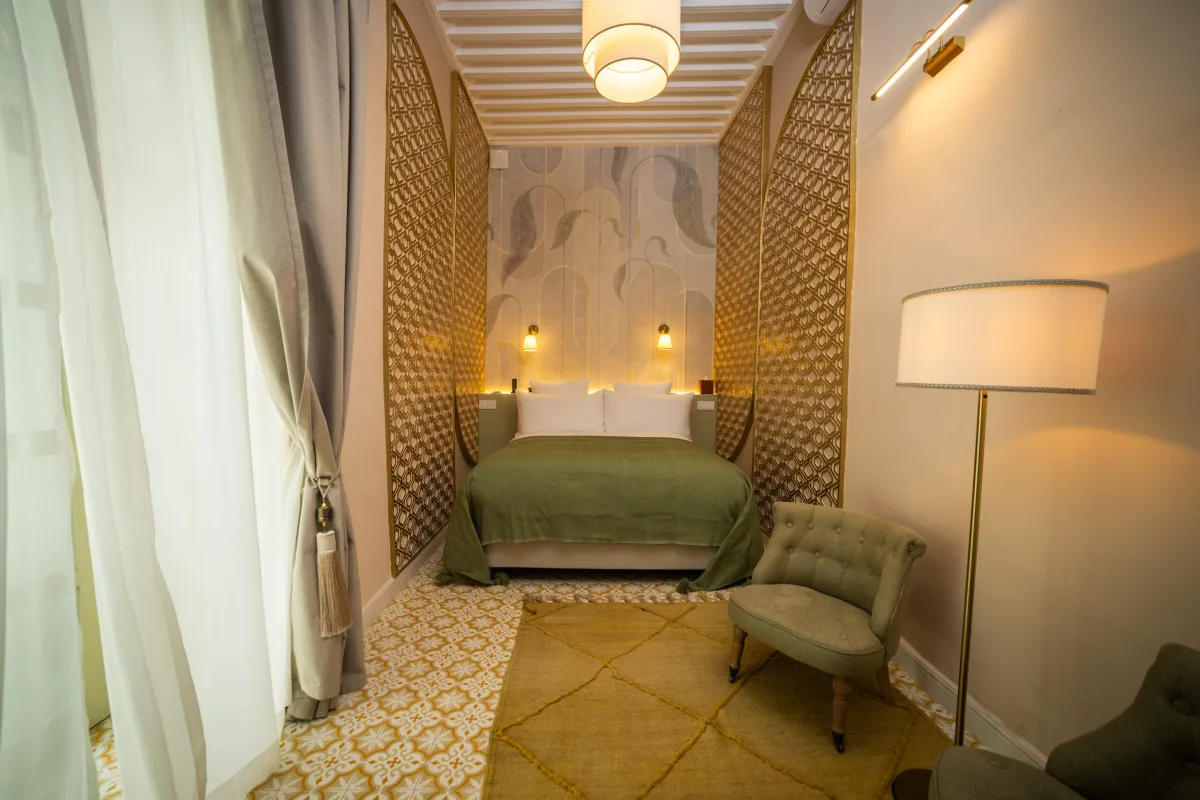
Inside the rooms, the floors speak another language: geometric cement tiles inspired by traditional Lebanese homes bring warmth, color, and character. The textiles remain deliberately soft and understated, creating balance.
But what truly leaves an impression, once the restoration is complete, is the way light moves through the palace. Every aspect of the renovation was designed around it: the light enters, diffuses, shifts in intensity throughout the day. The palace’s name — Beit Al Noor, the House of Light — is not a marketing concept. It is a feeling you experience the moment you step inside.
The Terraces and the Table
At the very top, two terraces offer what Marrakech treasures most: height and silence. From there, the eye drifts across the rooftops of the medina and, on clear days, toward the Atlas Mountains in the distance. It is here, I believe, that the palace reveals its finest self, as the evening light slowly fades.
The table, reserved exclusively for guests, extends this dialogue between Morocco and Lebanon: seasonal cuisine, generous and fragrant, rooted in fresh produce and inspired by the Mediterranean spirit that permeates the entire house.
Why I’m Sharing This Place With You
Nicolas Delsuc and I share something in common: we are both children of Abidjan. We have known each other for years, and it is through this connection that I had the chance to follow this project so closely. But if I choose to introduce you to Beit Al Noor today, it is not out of friendship — it is because I witnessed firsthand the sincerity, discipline, and care poured into its creation.
This house embodies a vision of hospitality I deeply recognize, one we also strive to cultivate along the Ivorian coast: the luxury of discretion, respect for craftsmanship, and hospitality as a sincere attention to others rather than a commercial performance.
You only truly recommend places you genuinely know. Beit Al Noor is one I had the privilege of seeing come to life.
If Marrakech calls to you, and if you are searching for more than a hotel — a house with a story, a soul, and a light of its own — then Beit Al Noor deserves that you step through its doors. Just as I once did, back when it was still only a promise.
Would you like to stay at Beit Al Noor?
We curate tailor-made stays in Marrakech.
Contact us — we reply within less than two hours.